
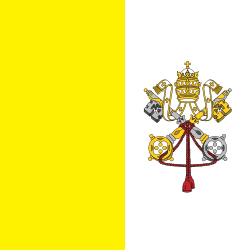
Vatican City (Holy See) News
Vatican City, officially known as the Vatican City State, is the smallest independent state in the world by both area and population. It is an independent city-state enclaved within the city of Rome, Italy, in Southern Europe. Vatican City serves as the spiritual and administrative center of the Roman Catholic Church.
The Holy See is the ecclesiastical jurisdiction of the Catholic Church and is recognized as a sovereign entity in international law. While closely connected, the Holy See and Vatican City State are legally distinct: the Holy See conducts diplomatic relations, while Vatican City provides the territory that guarantees its independence.
Vatican City covers an area of approximately 0.49 square kilometres and has a population of around about 800 residents, mainly clergy, members of religious orders, and Swiss Guards.
Key Country Information
- Capital City: Vatican City
- Head of State: Pope Francis
- Form of Government: Absolute elective monarchy
- Official Language: Latin (administrative); Italian widely used
- Currency: Euro (EUR)
- International Dialing Code: +379 (rarely used), +39 (Italy)
Population and Economy
As of 2024, Vatican City has an estimated population of about 800 people. The population consists primarily of clergy, religious members, and lay workers who serve the Holy See.
Vatican City does not have a traditional economy. Its income mainly comes from:
- Donations from Catholics worldwide (Peter’s Pence)
- Sale of postage stamps, coins, and souvenirs
- Vatican Museums admission fees
- Publications and media activities
There are no income taxes, and Vatican City does not issue its own passports for general citizenship purposes.
European Union and Schengen Status
Vatican City is not a member of the European Union, Eurozone, or Schengen Area, but it maintains special agreements with surrounding countries:
- EU Member State: ❌ Not a member
- Euro Area Member: ❌ Not a member (uses Euro by agreement with the EU)
- Schengen Area Member: ❌ Not a member
Although Vatican City is not part of Schengen, it has open borders with Italy, meaning there are no border checks when entering or leaving Vatican territory.
Living and Working in Vatican City
Vatican City is not a typical destination for residence or employment. Living and working there is limited to:
- Clergy and religious officials
- Members of the Swiss Guard
- Employees of the Holy See and Vatican institutions
Foreign nationals cannot freely apply to live or work in Vatican City. Residency is strictly tied to official duties and ends when those duties conclude.
No posts found.