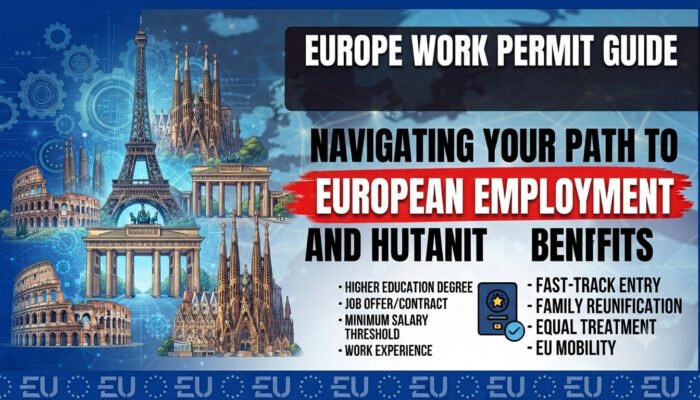
Europe Work Permit Guide provides essential information for non-European Union citizens who want to understand how they can legally work in European countries. With increasing demand for skilled professionals across industries such as technology, healthcare, engineering, construction, hospitality, and manufacturing, Europe continues to attract workers from around the world.
However, working in Europe requires proper authorization. Each European country has its own immigration rules, work permit categories, eligibility requirements, and application procedures. Understanding these requirements before applying can help foreign workers avoid delays and choose the right pathway for their professional goals.
This Europe Work Permit Guide explains the main types of work permits, common requirements, application steps, important documents, and practical advice for international workers planning to build a career in Europe.
What Is a Europe Work Permit?
A Europe work permit is an official authorization that allows a non-EU citizen to legally work in a European country. Unlike EU citizens who generally benefit from freedom of movement within the European Union, non-EU nationals usually need permission before starting employment.
The exact rules depend on the country where the person wants to work. For example, Germany, Croatia, France, the Netherlands, Poland, and other European countries each have their own systems for issuing employment permits and residence documents.
A work permit normally confirms that a foreign national has permission to perform a specific job under approved conditions, including employer, occupation, salary, and duration of employment.
Why Do Foreign Workers Need a Work Permit in Europe?
European countries regulate employment migration to protect local labour markets while allowing businesses to recruit international talent when necessary.
Work permits help governments:
- Manage labour migration.
- Protect employee rights.
- Ensure employers follow employment laws.
- Monitor immigration numbers.
- Address workforce shortages.
For foreign workers, obtaining the correct permit provides legal protection and allows access to employment benefits, healthcare systems, and residence rights depending on national regulations.
Types of Work Permits in Europe
There is no single European work permit that applies to every country. Instead, different countries offer various employment authorization options.
EU Blue Card
The EU Blue Card is one of the most recognised options for highly qualified professionals. It is designed for skilled workers with higher education qualifications and qualifying employment offers.
Professionals in fields such as information technology, engineering, medicine, research, and finance often consider the EU Blue Card as a pathway to work and residence in Europe.
General Employment Work Permit
Many European countries offer standard work permits for foreign employees who have received job offers from local employers.
Requirements usually include an employment contract, employer sponsorship, proof of qualifications, and compliance with salary regulations.
Seasonal Work Permits
Seasonal permits are available in certain industries where temporary labour demand increases, including agriculture, tourism, and hospitality.
These permits are usually limited to a specific period and do not always provide the same residence benefits as long-term employment permits.
Highly Skilled Worker Programs
Some European countries operate special immigration programs designed to attract professionals with specific skills. These programs may offer faster processing, simplified procedures, or additional benefits.
Europe Work Permit Requirements
Although requirements vary by country, most European work permit applications involve similar conditions.
Valid Job Offer
Most applicants need a confirmed employment offer from a company registered in the country where they plan to work.
The employment contract usually needs to include details such as job title, salary, working hours, and employment duration.
Professional Qualifications
Applicants may need to prove their education, professional experience, or technical skills depending on the occupation.
Regulated professions such as healthcare, law, and engineering may require additional recognition procedures.
Proof of Financial Stability
Some countries require evidence that applicants can support themselves financially during the immigration process.
Health Insurance
Applicants are often required to provide proof of valid health insurance coverage before receiving approval.
Clean Criminal Record
Many European immigration systems request police clearance certificates to confirm that applicants meet security requirements.
How to Apply for a Work Permit in Europe
The application process depends on the destination country, but the general steps are similar.
Step 1: Find Employment
The first step is securing a suitable job offer. Many European work permit applications require employer involvement, meaning applicants usually need employment before applying.
Step 2: Check Eligibility Requirements
Before submitting an application, applicants should confirm salary requirements, qualification rules, language requirements, and permit categories.
Step 3: Prepare Documents
Common documents include:
- Valid passport.
- Employment contract.
- Educational certificates.
- Professional qualifications.
- Passport photographs.
- Health insurance documents.
- Proof of accommodation.
- Criminal record certificate.
Germany
Germany is one of Europe’s largest employment markets and regularly attracts international professionals in technology, engineering, healthcare, manufacturing, and skilled trades.
The country offers several immigration pathways for qualified workers, including skilled worker residence permits and the EU Blue Card program.
Croatia
Croatia has become an increasingly attractive destination for foreign workers due to labour shortages in tourism, hospitality, construction, transportation, and other sectors.
Non-EU citizens may require a work and residence permit before beginning employment, with applications generally connected to an approved job position.
Netherlands
The Netherlands is known for opportunities in technology, finance, logistics, research, and innovation. Highly skilled migrants may qualify for specialised immigration programs.
Ireland
Ireland attracts international professionals, especially in technology, healthcare, pharmaceuticals, and financial services. English-speaking professionals often consider Ireland because of its international business environment.
France
France provides various employment pathways for foreign nationals, including options for skilled workers, researchers, and professionals in shortage occupations.
Work Permit vs Residence Permit in Europe
Many applicants confuse work permits and residence permits because they are often connected. However, they serve different purposes.
| Work Permit | Residence Permit |
|---|---|
| Allows a foreign national to work legally. | Allows a foreign national to legally stay in the country. |
| Usually connected to employment conditions. | May include work rights depending on the permit type. |
| Often requires employer involvement. | Usually managed through immigration authorities. |
In many European countries, non-EU workers need both employment authorization and legal residence status to live and work successfully.
Common Mistakes When Applying for a European Work Permit
Many work permit applications experience delays because applicants overlook important requirements. Avoiding common mistakes can improve the chances of a successful application.
- Applying without a valid job offer.
- Choosing the wrong permit category.
- Submitting incomplete documents.
- Ignoring qualification recognition requirements.
- Failing to check salary thresholds.
- Using outdated immigration information.
- Missing application deadlines.
- Not translating required documents correctly.
Applicants should always verify information through official government immigration websites before submitting documents.
Tips for a Successful Europe Work Permit Application
A well-prepared application can reduce delays and improve the overall immigration experience.
- Research the immigration rules of your target country.
- Prepare documents before receiving a job offer.
- Ensure educational certificates are properly recognised.
- Keep copies of all submitted documents.
- Maintain communication with your employer.
- Apply early because processing times vary.
- Seek professional advice when dealing with complex cases.
Role of Employers in the Work Permit Process
Employers play an important role in many European work permit applications. Depending on the country, companies may need to provide supporting documents, prove recruitment efforts, or demonstrate that employment conditions meet legal standards.
Companies hiring international employees should understand immigration responsibilities and ensure compliance with local labour laws.
A reliable employer can make the immigration process significantly easier by providing accurate documentation and guidance throughout the application process.
Useful Official Resources
Applicants should always use official government sources when researching work permits and immigration procedures.
European Commission – Migration and Home Affairs
EURES European Job Mobility Portal
Your Europe – Working in the EU
Related Articles
EU Blue Card Guide: Requirements and Benefits
EU Residence Permit Guide
How to Move to Europe for Work
Frequently Asked Questions About Europe Work Permits
Can non-EU citizens work in Europe?
Yes. Non-EU citizens can work in Europe if they obtain the appropriate work authorization and residence permission required by the destination country.
Is there one Europe-wide work permit?
No. European countries have their own immigration systems. Some programs, such as the EU Blue Card, follow a common framework, but applications are handled nationally.
How long does a European work permit take?
Processing times vary depending on the country, application type, employer requirements, and the completeness of submitted documents.
Can I change employers after receiving a work permit?
This depends on the country and type of permit. Some permits allow changes with notification, while others require additional approval.
Can my family join me if I receive a European work permit?
Many European countries provide family reunification options for eligible workers. Requirements differ depending on national immigration rules.
Conclusion
This Europe Work Permit Guide highlights the essential steps international workers should understand before starting their professional journey in Europe. While each country has unique immigration requirements, most successful applications depend on having a valid employment opportunity, meeting qualification standards, and preparing complete documentation.
Europe continues to attract skilled professionals from around the world due to strong economies, career opportunities, and diverse living environments. Whether you are a technology specialist, healthcare professional, engineer, tradesperson, or seasonal worker, choosing the correct immigration pathway is an important first step.
Before applying, always review the latest rules from official immigration authorities because work permit requirements can change based on labour market needs and government policies.
With proper preparation and reliable information, obtaining a European work permit can become a realistic pathway toward international career growth and a new future in Europe.