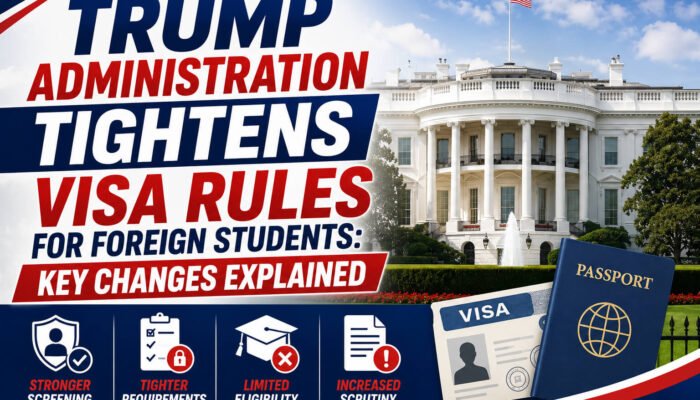
Trump administration tightens visa rules for foreign students with a series of policy changes that introduce stricter monitoring, fixed periods of stay, and additional compliance requirements for many international students studying in the United States. The updated framework represents one of the most significant adjustments to student visa administration in recent years and could affect thousands of current and future applicants.
International students have long played an important role in American higher education, contributing to research, innovation, and university communities. Under previous immigration procedures, many students holding F-1 academic visas and J-1 exchange visitor visas remained in the country under what was known as “duration of status,” allowing them to stay legally while continuing their approved academic programs.
The latest policy introduces a more structured system by establishing defined periods of authorized stay and requiring some students to seek additional government approval if they need more time to complete their studies. Supporters argue the changes strengthen immigration oversight, while critics believe they could create uncertainty for universities and international students.
Why the Student Visa Rules Are Changing
The U.S. government says the updated regulations are designed to strengthen immigration controls and improve oversight of non-immigrant visa holders. Officials argue that establishing fixed admission periods allows immigration authorities to review student eligibility more regularly instead of allowing open-ended stays tied only to academic enrollment.
According to government statements, the changes are intended to reduce opportunities for misuse of student visa programs while improving national security through periodic review and verification.
Supporters of the policy believe scheduled reviews encourage greater compliance with immigration laws and provide federal agencies with updated information about visa holders throughout their stay.
How the Previous System Worked
For many years, most international students entered the United States under a system known as Duration of Status (D/S). Rather than receiving a fixed departure date, eligible students could remain in the country for as long as they maintained lawful student status and continued progressing through their approved educational program.
This approach gave universities flexibility to accommodate students whose academic programs required additional time because of research obligations, thesis preparation, internships, or other educational requirements.
Graduate students, doctoral candidates, and research scholars frequently benefited from this system because advanced academic programs often extend beyond traditional undergraduate study timelines.
What the New Rules Mean
Under the updated policy framework, many foreign students will receive a fixed period of authorized stay instead of remaining under an open-ended duration of status. Students who need additional time to finish their studies may need to apply for an extension before their authorized stay expires.
This change shifts greater responsibility to individual students to monitor immigration deadlines and complete any required extension procedures before their authorized period ends.
Universities will continue to support international students through designated school officials, but federal immigration authorities will have a more direct role in determining whether additional time may be granted.
Potential Impact on Graduate Students
Graduate students and doctoral researchers may experience the greatest impact from the revised rules. Unlike many undergraduate degrees that can often be completed within four years, graduate programs frequently require additional time for research, laboratory work, dissertations, publications, and academic collaboration.
Research funding delays, changes in project scope, or unforeseen personal circumstances may also affect the length of advanced degree programs. Under a system with fixed admission periods, students in these situations may need to complete additional immigration procedures before continuing their studies.
Universities that host large numbers of international researchers may also need to expand advising services to help students remain compliant with immigration requirements.
Shorter Grace Period After Graduation
Another important change affects the period following graduation. Under the revised framework, eligible students may have less time to remain in the United States after completing their studies before departing the country or changing to another immigration category.
This shorter transition period means graduates planning to begin employment, apply for another visa, or continue their education should prepare well before completing their academic program.
Careful planning will become increasingly important for students considering Optional Practical Training (OPT), employment sponsorship, or further academic study.
Universities and Education Groups Respond
Several organizations representing colleges, universities, and international education professionals have expressed concern about the new requirements. Critics argue that additional administrative procedures may increase uncertainty for students while creating more work for educational institutions responsible for supporting international enrollment.
Higher education leaders also note that international students contribute significantly to scientific research, technology development, innovation, and campus diversity. They believe predictable immigration policies help universities remain competitive in attracting talented students from around the world.
Some education organizations have encouraged continued dialogue between government agencies and universities to ensure national security objectives are balanced with educational and research priorities.
Who Could Be Affected?
The policy primarily affects non-immigrant students and exchange visitors studying in the United States under specific visa categories. Prospective applicants considering future enrollment at American universities should carefully review the latest immigration requirements before submitting visa applications.
Current students may also benefit from speaking with their university’s international student office to understand how the updated rules could affect their individual circumstances.
How International Students Can Prepare
International students planning to study in the United States should take a proactive approach to understanding immigration requirements. Staying informed about policy updates, maintaining valid immigration documents, and communicating regularly with university international student offices can help reduce potential complications.
Students should also keep track of important visa dates, passport validity, program completion timelines, and any requirements related to work authorization or visa extensions. Planning ahead becomes especially important for graduate students whose research projects may require additional time beyond their original academic schedule.
Maintaining full-time enrollment, complying with university reporting requirements, and promptly updating personal information with the appropriate authorities remain essential responsibilities for F-1 and J-1 visa holders.
What the Changes Could Mean for U.S. Universities
American universities have long attracted students from around the world because of their academic reputation, research opportunities, and diverse campus environments. International students also contribute significantly to university communities through tuition payments, research activities, cultural exchange, and innovation.
If immigration procedures become more complex, universities may need to provide additional advising resources to help students understand changing regulations. Institutions that host large numbers of international students could also face increased administrative responsibilities related to immigration compliance.
Some education experts believe that policy certainty plays an important role in attracting talented students, while others argue that stronger oversight can improve confidence in the integrity of the student visa system.
Impact on Research and Innovation
Graduate students and international researchers play an important role in many American universities, particularly in science, technology, engineering, healthcare, and mathematics. Many research laboratories rely on doctoral candidates and postdoctoral researchers who contribute to long-term academic projects.
Additional immigration procedures could require some students to devote more attention to administrative requirements during their studies. Universities may therefore place greater emphasis on immigration advising to help researchers remain compliant while completing their academic work.
Although the long-term impact remains uncertain, employers, universities, and research institutions will likely continue monitoring how the updated rules affect international recruitment and academic collaboration.
Practical Tips for Student Visa Holders
Students currently studying in the United States or planning to apply for admission can reduce potential difficulties by following several practical steps.
- Monitor visa validity and immigration deadlines carefully.
- Keep copies of immigration documents in a secure location.
- Maintain communication with your university’s international student office.
- Understand the conditions attached to your visa category.
- Prepare extension applications well before any deadline if required.
- Review official government announcements regularly.
- Seek professional immigration advice if your circumstances change.
Looking Ahead
Immigration policies frequently evolve in response to government priorities, legal developments, and national security considerations. Students planning to begin studies in the United States should avoid relying on outdated information and instead consult official government guidance before making important decisions.
Universities are also expected to continue updating their international student resources as additional implementation guidance becomes available.
Because immigration regulations may continue to change, flexibility and careful planning will remain important for students pursuing higher education in the United States.
Official Resources
International students should rely on official government websites for the latest immigration information and visa guidance.
Study in the States – U.S. Department of Homeland Security
U.S. Citizenship and Immigration Services (USCIS)
U.S. Department of State – Student Visas
Related Articles
Complete U.S. Student Visa Guide
F-1 Visa Requirements Explained
How to Study in the USA as an International Student
Frequently Asked Questions
Who is affected by the new student visa rules?
The updated rules primarily affect international students and exchange visitors in visa categories such as F-1 and J-1. Individual circumstances may vary depending on immigration status and the specific regulations that apply.
Will all students be limited to four years?
The implementation of fixed periods of stay depends on the final rule and individual circumstances. Students whose academic programs require additional time may need to follow the applicable extension procedures established by U.S. immigration authorities.
Can students still change universities?
Transfers may still be possible, but students should review the latest government guidance and work closely with their designated school officials to ensure they remain compliant with immigration requirements.
Where can students find official information?
The best sources are official U.S. government websites, including the Department of Homeland Security, USCIS, the Department of State, and the international student office at the student’s educational institution.
Conclusion
Trump administration tightens visa rules for foreign students through a policy that places greater emphasis on fixed periods of stay, regular immigration oversight, and additional compliance requirements. Supporters view the changes as a way to strengthen immigration enforcement, while critics argue they may increase uncertainty for universities and international students.
For current and prospective students, understanding the new requirements, monitoring official government announcements, and planning ahead will be essential. Immigration rules can change over time, so relying on accurate information from official sources remains the best approach when preparing to study in the United States.