
 Blog
BlogConstruction Safety Helmets
Construction safety helmets, also known as hard hats or safety helmets, are one of the most important pieces of personal protective equipment (PPE) used on construction sites worldwide.
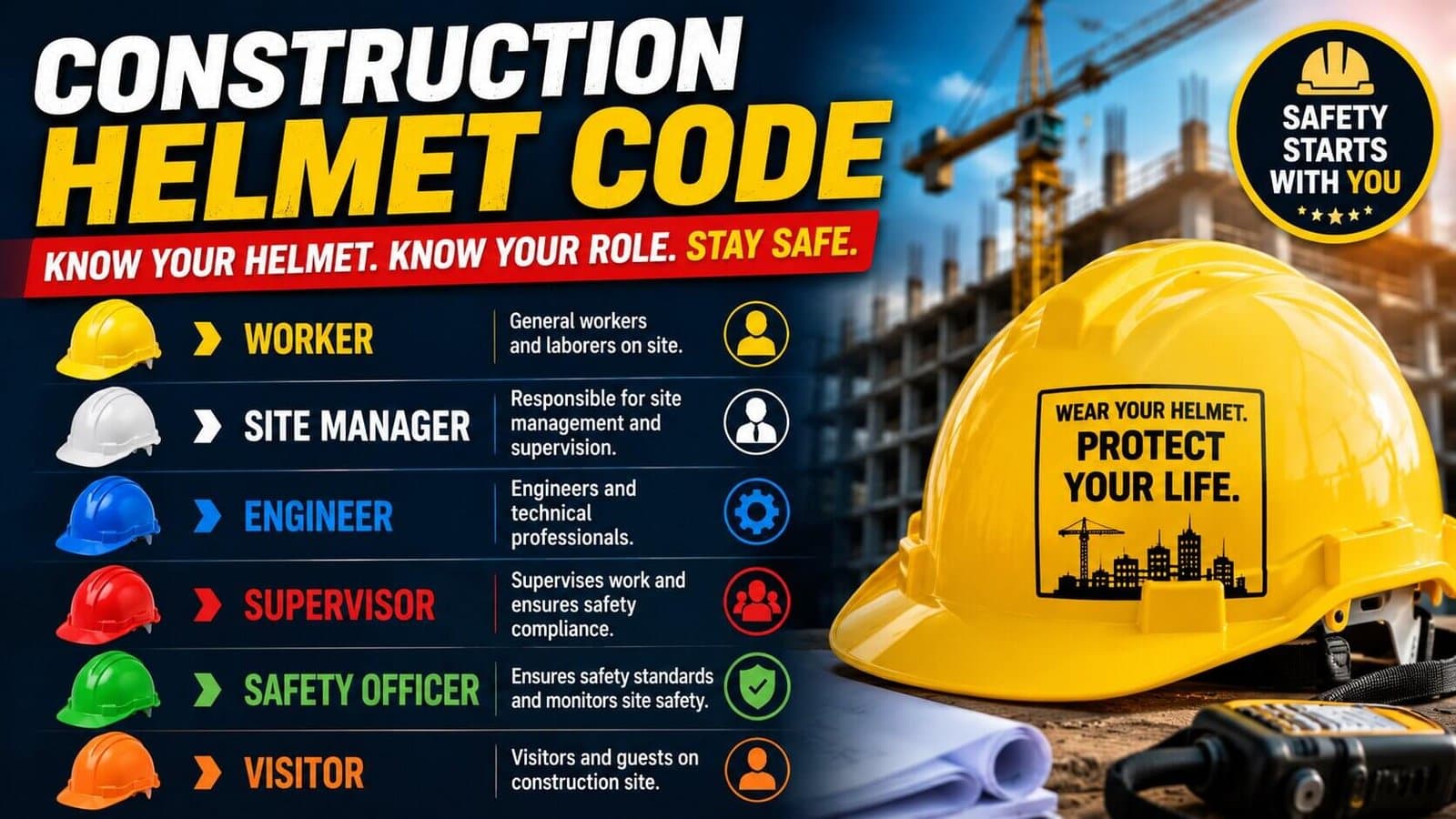
Construction safety Helmet color codes are commonly used to identify different roles, responsibilities, and safety positions on a worksite. Although exact color systems may vary between companies and countries, many construction sites follow similar standards to improve communication, safety, and emergency response.
Understanding helmet color meanings can help workers, supervisors, visitors, and foreign employees work more safely and efficiently.
Why Construction Safety Helmets Colors Matter
Construction sites often involve:
- Heavy machinery
- Electrical systems
- Work at heights
- Multiple contractors
- Dangerous tools and equipment
- Large numbers of workers
Using different helmet colors helps workers quickly identify:
- Supervisors
- Engineers
- Electricians
- Visitors
- Safety officers
- New workers
- General laborers
This system improves workplace organization and can support faster emergency response during accidents or safety incidents.
Common Construction Helmet Color Codes
The following color meanings are commonly used on many construction sites. However, companies may apply their own internal safety systems.
White Helmet – Engineers, Supervisors & Managers
White helmets are often worn by:
- Site engineers
- Construction managers
- Supervisors
- Architects
- Inspectors
- Senior staff
Workers usually recognize white helmets as leadership or technical personnel on the site.
Yellow Helmet – General Construction Workers
Yellow is one of the most common helmet colors in construction.
Usually worn by:
- General laborers
- Earthwork workers
- Machine assistants
- Skilled trade workers
Many foreign workers on construction sites wear yellow helmets during regular operations.
Blue Helmet – Electricians & Technical Operators
Blue helmets are commonly assigned to:
- Electricians
- Technical operators
- Carpenters
- Heavy equipment operators
The exact meaning may differ depending on company policy.
Green Helmet – Safety Personnel or New Workers
Green helmets are often used for:
- Safety officers
- First aid personnel
- Trainees
- New workers
In some companies, green helmets help identify workers who may need additional supervision or safety guidance.
Red Helmet – Fire Safety & Emergency Teams
Red helmets are frequently associated with:
- Fire marshals
- Emergency response teams
- Special safety personnel
These workers may assist during accidents, evacuations, or fire-related emergencies.
Orange Helmet – Road Work & High-Risk Areas
Orange helmets are sometimes used for:
- Road construction workers
- Traffic control workers
- High-visibility operations
Bright colors help improve visibility in dangerous environments.
Grey or Brown Helmet – Welders & Specialized Workers
Some sites use grey or brown helmets for:
- Welders
- High-heat work areas
- Specialized technical workers
These color assignments are less universal and depend on company rules.
Are Helmet Color Codes the Same in Every Country?
No. There is no single worldwide law that requires identical helmet color systems everywhere.
Different countries and companies may use different color standards depending on:
- National safety regulations
- Company safety policies
- Project requirements
- Industry sector
Workers should always follow the safety instructions provided by their employer or site supervisor.
Important Construction Helmet Safety Rules
A helmet only provides protection if used correctly.
Important safety rules include:
- Always wear the helmet properly
- Adjust the internal suspension correctly
- Do not modify or drill the helmet
- Replace damaged helmets immediately
- Inspect helmets regularly for cracks or damage
- Keep helmets clean and dry
A damaged or expired helmet may fail to protect workers during accidents.
How Often Should Safety Helmets Be Replaced?
Replacement schedules depend on:
- Manufacturer instructions
- Exposure to sunlight and heat
- Physical damage
- Worksite conditions
Many manufacturers recommend replacing helmets every few years even if no visible damage exists.
Workers should also replace helmets immediately after strong impacts or accidents.
Why Foreign Workers Should Understand Helmet Colors
Many foreign workers join construction projects in countries where language barriers may exist.
Helmet colors help workers quickly identify:
- Who is the supervisor
- Who can provide safety instructions
- Who handles emergencies
- Which workers perform technical tasks
This improves communication and may reduce workplace accidents.
Conclusion
Construction helmet color codes are an important part of workplace safety and organization. While color meanings may vary between companies and countries, they are commonly used to identify different worker roles and responsibilities on construction sites.
Understanding helmet color systems can help workers improve communication, follow safety procedures, and work more effectively in busy construction environments.
Workers should always follow the safety rules and instructions provided by their employer, site supervisor, and local occupational safety regulations.
Frequently Asked Questions (FAQ)
What does a white construction helmet mean?
White helmets are commonly worn by engineers, managers, supervisors, and technical staff.
What color helmet do general workers wear?
Yellow helmets are commonly used for general construction workers and laborers.
Are helmet color codes legally required?
Not always. Many companies use internal safety systems, and rules may differ between countries.
Can workers use damaged helmets?
No. Damaged helmets should be replaced immediately because they may not provide proper protection.
Why are helmet colors important?
Helmet colors help identify worker roles quickly and improve communication and safety on construction sites.