
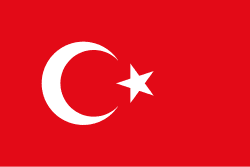
Turkey (partly in Europe) News
Turkey, officially the Republic of Türkiye, is a transcontinental country located at the crossroads of Europe and Asia. A small portion of its territory, known as Eastern Thrace, lies in Southeastern Europe, while the majority of the country is located in Western Asia (Anatolia). Turkey borders Greece and Bulgaria to the northwest, Georgia to the northeast, Armenia, Azerbaijan (Nakhchivan), and Iran to the east, and Iraq and Syria to the south. It is surrounded by the Black Sea, Aegean Sea, and Mediterranean Sea.
Turkey covers an area of approximately 783,562 square kilometres and has a population of around 85 million people. The country is known for its rich history, strategic location, cultural diversity, and role as a bridge between Europe and Asia.
Key Country Information
- Capital City: Ankara
- Head of State & Government (President): Recep Tayyip Erdoğan
- Official Language: Turkish
- Currency: Turkish Lira (TRY)
- International Dialing Code: +90
Population and Economy
As of 2024, Turkey’s population is estimated at 85 million. Turkey has a large and diverse economy, with key sectors including manufacturing, construction, tourism, agriculture, automotive, textiles, energy, and defense industries.
Turkey is one of the world’s top tourist destinations, attracting millions of visitors each year. Major cities such as Istanbul, Ankara, and Izmir serve as economic, cultural, and industrial hubs. The country also plays a significant role in regional trade and logistics due to its geographic position.
European Union and Schengen Status
Turkey is not a member of the European Union, Eurozone, or Schengen Area, but it maintains close political and economic relations with the EU:
- EU Member State: ❌ Not a member (EU candidate country since 1999)
- Euro Area Member: ❌ Uses Turkish Lira (TRY)
- Schengen Area Member: ❌ Not a member
Turkish citizens generally require a Schengen visa to travel to Schengen countries. EU citizens may enter Turkey visa-free or with an e-Visa, depending on nationality.
Living and Working in Turkey
Turkey is an attractive destination for foreign nationals due to:
- A large job market in tourism, education, manufacturing, and construction
- Affordable cost of living compared to many European countries
- Dynamic cities with modern infrastructure
- Rich cultural and historical environment
EU and non-EU citizens alike usually require a residence permit and work permit to legally live and work in Turkey. Work permits are typically employer-sponsored and issued by the Ministry of Labor and Social Security.
Summary
Turkey is a strategically important transcontinental country connecting Europe and Asia. While it is not part of the EU, Eurozone, or Schengen Area, Turkey remains a major regional power with a large economy, strong tourism sector, and growing international workforce. Its unique geographic position and cultural heritage make it an important country within the broader European and Eurasian region.
No posts found.