
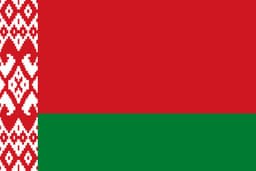
Belarus News
Belarus, officially known as the Republic of Belarus, is a landlocked country in Eastern Europe. It shares borders with Russia to the east and northeast, Ukraine to the south, Poland to the west, and Lithuania and Latvia to the northwest.
The country covers an area of approximately 207,600 square kilometres and has a population of around 9.1 million people. Belarus plays a strategic role in Eastern Europe due to its geographic location between the European Union and Russia.
Key Country Information
-
Capital City: Minsk
-
President: Aleksandr Lukashenko
-
Official Languages: Belarusian, Russian
-
Currency: Belarusian Ruble (BYN)
-
International Dialing Code: +375
Population and Economy
As of 2024, Belarus has an estimated population of 9.134 million, according to World Bank data. The country’s economy is largely state-controlled, with major sectors including manufacturing, agriculture, energy, and chemicals.
Belarus recorded a gross domestic product (GDP) of approximately USD 75.96 billion in 2024, reflecting moderate economic output compared to other Eastern European nations.
European Union and Schengen Status
Belarus is not a member of major European political or economic unions:
-
EU Member State: ❌ Not a member
-
Euro Area Member: ❌ Not applicable
-
Schengen Area Member: ❌ Not a member
Belarus does not participate in the European Union, does not use the euro as its currency, and is outside the Schengen Area. Travel to and from Belarus generally requires visas, depending on nationality and bilateral agreements.
Summary
Belarus is an Eastern European country with a distinct political and economic system, separate from EU institutions. While it maintains close ties with neighboring countries, particularly Russia, it remains outside the European Union, Eurozone, and Schengen Area. Its capital, Minsk, serves as the political, economic, and cultural center of the country.
No posts found.